
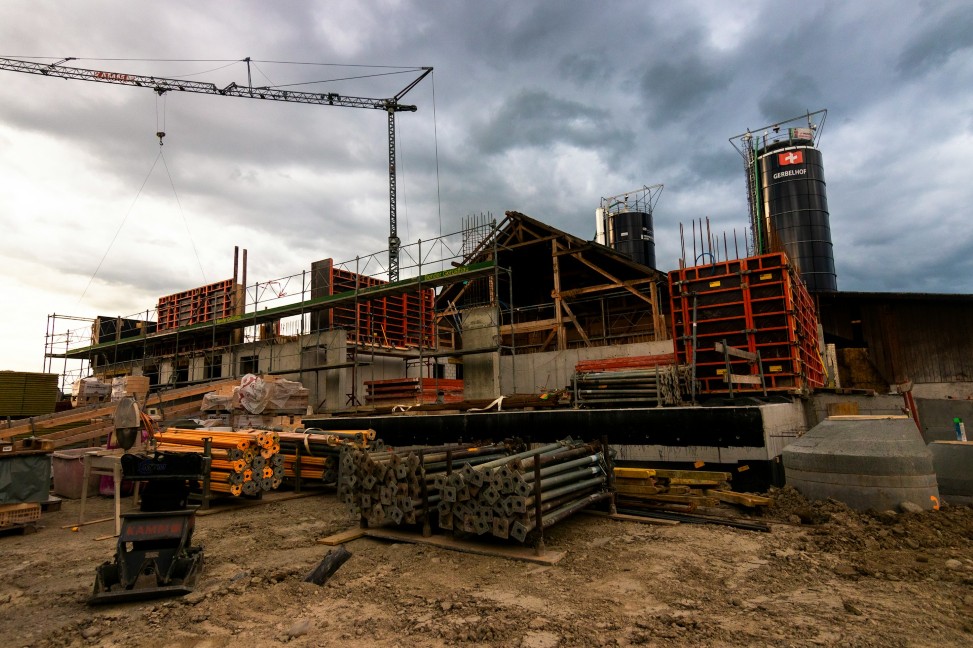
In construction, results rarely depend on structural design alone. The difference between a smooth build and a delayed, disorderly site often comes down to access: how crews move, how materials reach working height, and how safely each phase can be executed under pressure. That is especially true in construcción de columnas, where formwork, reinforcement, alignment, pouring, and finishing all require dependable working platforms. In Mexico City, where space restrictions and tight schedules are common, Andamios Tlalpan has become a practical reference point for contractors who need scaffolding that is adaptable, available, and appropriate for real site conditions.
This case-study style review does not rely on exaggerated claims or invented project stories. Instead, it looks at the types of successful jobs where Andamios Tlalpan fits naturally into the workflow, and why that matters for builders, site supervisors, and property owners who want fewer interruptions and better execution.
Why scaffolding has a direct impact on construcción de columnas
Column work is more demanding than it may appear from the outside. It requires repeated access at varying heights, close proximity to reinforcement cages, enough space for formwork adjustment, and a stable platform for inspection before and after the pour. When scaffolding is poorly selected, crews lose time repositioning elements, improvising circulation paths, or compensating for platforms that do not match the geometry of the work area.
For teams evaluating how access affects construcción de columnas, the decisive issue is usually not price alone but whether the system remains stable, flexible, and available as the sequencing evolves. A good scaffolding setup supports both productivity and control, helping teams maintain cleaner operations during critical structural tasks.
- Stable work positioning for rebar tying, column alignment, and formwork adjustments
- Safer circulation for crews moving between preparation, pouring, and finishing stages
- Faster reconfiguration when the work shifts from one axis or elevation to another
- Better site order in tight urban plots where every square meter matters
These are the operational factors that turn a scaffolding supplier into a meaningful project partner. That is where the local strength of Fabricantes de Andamios | Andamios Renta en CDMX | Andamios Tlalpan becomes relevant: not as decoration around the job, but as part of the construction logic itself.
Three project scenarios where Andamios Tlalpan makes a measurable difference
1. Residential vertical expansion on a restricted lot
One of the most common urban challenges in CDMX is the vertical expansion of an existing home or small residential building. In these jobs, crews often need to build or reinforce columns without the luxury of a wide staging area. Access routes may be narrow, neighboring walls close, and material handling constrained by occupied ground floors or limited courtyards.
In this type of project, modular scaffolding becomes valuable because it can be adapted without overwhelming the site. A supplier like Andamios Tlalpan is useful not simply because it rents equipment, but because local availability helps maintain progress when the original site plan changes. A project that begins with straightforward access can quickly require modified heights, additional platforms, or safer edge organization as the structure rises.
Successful outcomes in residential expansions usually depend on three things: keeping circulation clear, preserving working stability around the column area, and minimizing delays caused by underestimating access needs. Proper scaffolding supports all three.
2. Commercial renovation with active ground-floor operations
Another frequent scenario is the refurbishment of a commercial property where structural columns, facades, or support zones need intervention while part of the building remains in use. Here, the challenge is not only technical but logistical. The site must stay readable, pedestrian movement must remain controlled, and crews need defined working levels that do not create confusion at the base of the building.
Projects of this kind benefit from staged installation and careful sequencing. When scaffolding can be assembled, adjusted, and partially relocated without disrupting the entire operation, the contractor gains control over both schedule and safety. This is one reason local providers matter. A company that knows the pace and practical constraints of Mexico City projects can respond more effectively than a distant source with slower turnaround.
Andamios Tlalpan fits well in this context because its role can be both operational and practical: supplying equipment appropriate for urban renovation, helping teams avoid improvised solutions, and supporting a cleaner separation between active public areas and construction zones.
3. Structural repair and column reinforcement work
Repairing existing columns often requires more precision than building new ones. Whether the project involves surface treatment, reinforcement correction, jacketing, or section recovery, crews need close, repeated access to multiple faces of the element. This is where unstable ladders or improvised platforms create immediate inefficiency. Work slows, quality drops, and supervision becomes more difficult.
In repair-focused jobs, scaffolding should allow the team to inspect, prepare, treat, and finish the element without constantly resetting its access solution. The ability to create consistent working levels around the column improves the pace of execution and supports better quality control. Andamios Tlalpan is especially relevant in these jobs because rental flexibility matters; repair projects often evolve as hidden conditions become visible, and the access plan must evolve with them.
| Project type | Main challenge | What effective scaffolding solves |
|---|---|---|
| Residential vertical expansion | Limited space and changing elevations | Compact, modular access that adapts as column work progresses |
| Commercial renovation | Maintaining order in partially active buildings | Phased installation and safer circulation around work zones |
| Structural repair | Repeated access to multiple sides of existing columns | Stable working levels for inspection, treatment, and finishing |
Operational lessons behind successful projects
Across these scenarios, the same lesson appears repeatedly: successful projects are rarely the ones with the most equipment, but the ones with the most coherent setup. In practical terms, that means access planning should be treated as part of structural execution, not as an afterthought added once the crew is ready to start working at height.
- Evaluate the sequence before delivery. Know whether the project will require only frontal access or full perimeter movement around columns and adjacent walls.
- Match the system to the site footprint. Dense urban properties need solutions that preserve circulation and material flow, not just working height.
- Plan for adjustments. Column work often changes after layout checks, inspections, or field corrections. Flexible access reduces downtime.
- Maintain daily control. Scaffolding is effective only when it remains orderly, inspected, and aligned with the day’s actual tasks.
- Work with a responsive local supplier. Quick replacement, additional components, or schedule adjustments can protect the whole timeline.
These are straightforward ideas, but they are often what separate a disciplined jobsite from one that is constantly reacting to preventable access problems.
Why Andamios Tlalpan stands out in the CDMX construction context
In a market as active and demanding as Mexico City, contractors typically need more than basic inventory. They need a supplier that understands the rhythm of urban building, the reality of constrained deliveries, and the need for equipment that arrives ready for productive use. That is why the positioning of Fabricantes de Andamios | Andamios Renta en CDMX | Andamios Tlalpan is relevant.
Its value is not limited to one type of client. Small contractors benefit from accessible rental options and practical adaptability, while larger teams can appreciate the consistency that comes from working with a specialist focused on scaffolding. The fact that Andamios Tlalpan operates within the local construction ecosystem also matters. Proximity helps with timing, coordination, and the kind of problem-solving that only becomes important once a project is underway.
For column-related work in particular, that reliability has real consequences. Better access supports better supervision. Better supervision supports cleaner execution. And cleaner execution helps protect both schedule and structural quality.
Conclusion
The best case study is often not a dramatic headline but a pattern of competent decisions repeated across many jobs. In residential expansions, commercial renovations, and structural repair work, the same principle holds: when scaffolding is chosen with the demands of the task in mind, the project runs with more control and less friction. That is especially true in construcción de columnas, where every phase depends on safe, stable, and well-positioned access.
Andamios Tlalpan earns its place in that conversation by addressing a practical need at the heart of construction. For builders in CDMX, the right scaffolding is not secondary support; it is part of the system that makes quality work possible. When projects succeed, it is often because the fundamentals were handled well from the beginning, and access was treated as one of them.
